
Business Eco-System
Visualise your Business Eco-System by mapping actors and their relationships in a network — it helps you understand their roles, activities and strategies. This page shows which tools we use and how we like to use them.
1. Overview
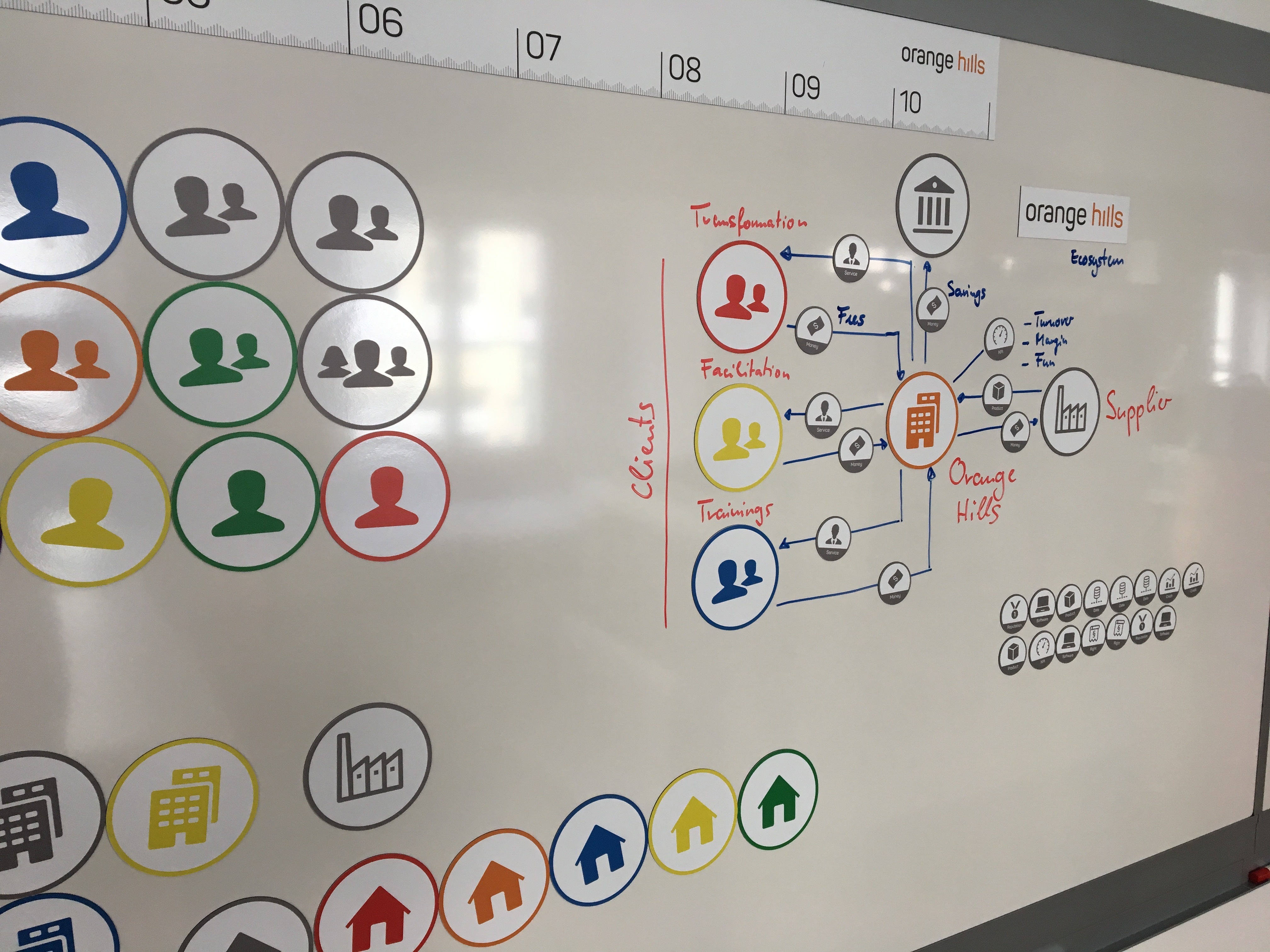
A Business Eco-System is a network of actors — suppliers, distributors, customers, dealers, competitors, government agencies, and more — involved in delivering a specific business, product or service through both competition and cooperation. Actors affect and are affected by each other, creating a constantly evolving relationship and exchange. Each has its own strategy, plays a certain role, and performs differently. Like in a biological eco-system, every actor must stay flexible and adaptable to survive. In Business Design, we define the following actors:
Customer
User
Partner (R&D)
Partner (Delivery & logistics)
Dealer
Bank
Government agency
Server (IT)
Sensor (IT)
Different roles within organisations (e.g. Marketing, Support)
Roles in Business Design




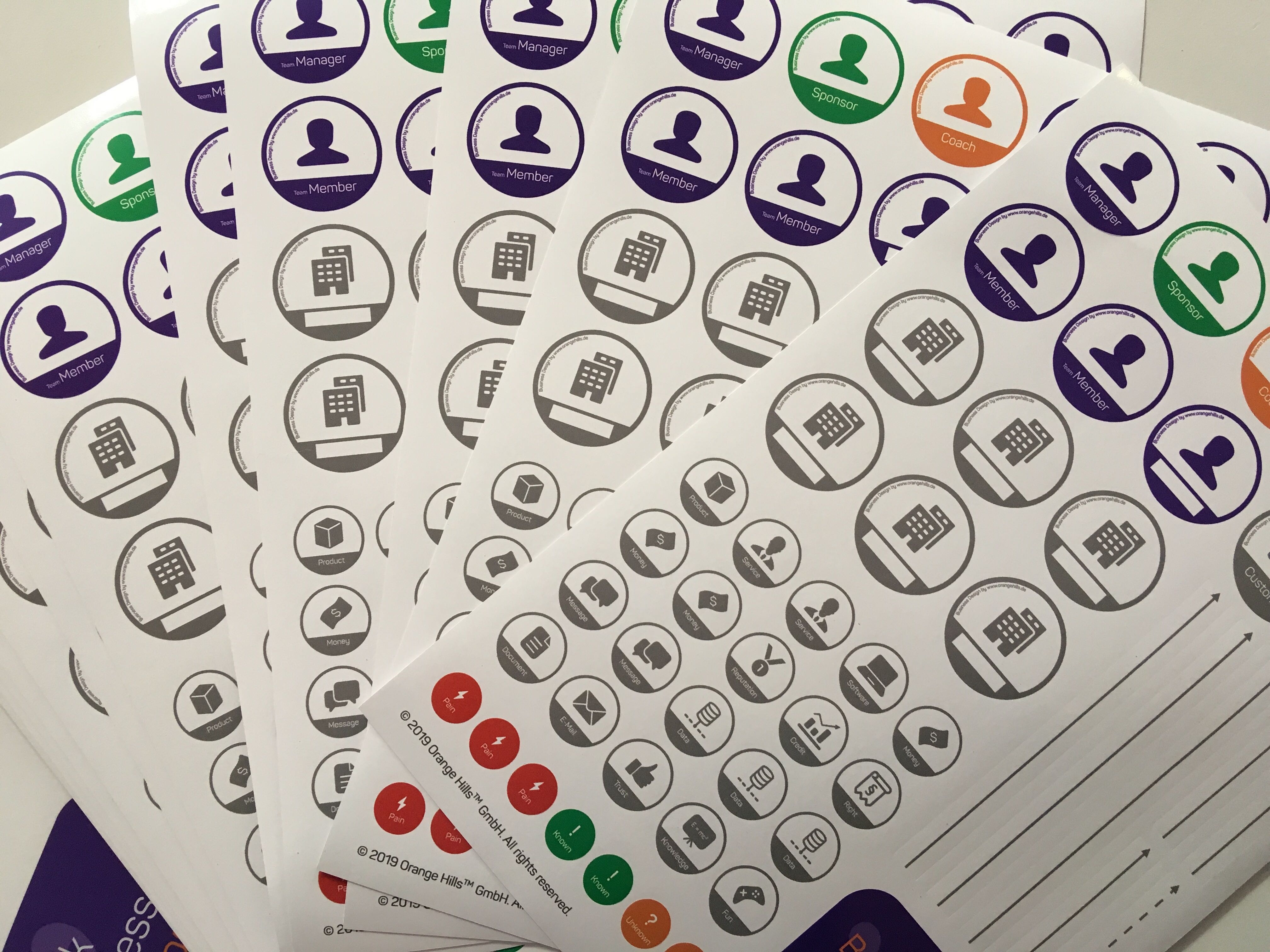
To describe the relationship between actors, we define the following exchange items:
Product
Service
Money
Right
Reputation
Credit
Knowledge
Data / document / message / email etc.
Software
Trust
Fun












2. Layout
This example shows how magnetic shapes for actors and exchange items help you visualise a Business Eco-System on a whiteboard.
Need actors and exchange items as magnetic shapes? Drop us a line: support@orangehills.com
3. Usage Scenarios
Analyse today's business environment to find ways to influence the system in your favour.
4. Instructions for Coaches
Define the key actors in your Business Eco-System.
Describe each actor's strategy, role and performance metrics.
Define the relationships between actors — one-directional or bidirectional — and mark them with arrows.
Describe each relationship using exchange items.
Identify hazards, errors, pain points and process interruptions. Then brainstorm how you can influence the system in your favour.