
Business Model
The business model template has been designed to visualise the essential ingredients of a business model as a future business scenario on one page. Read more about key elements, usage scenarios as well as Q&A and download the template for your team.

Bernhard Doll
Business Design Maverick
Content
1. Overview
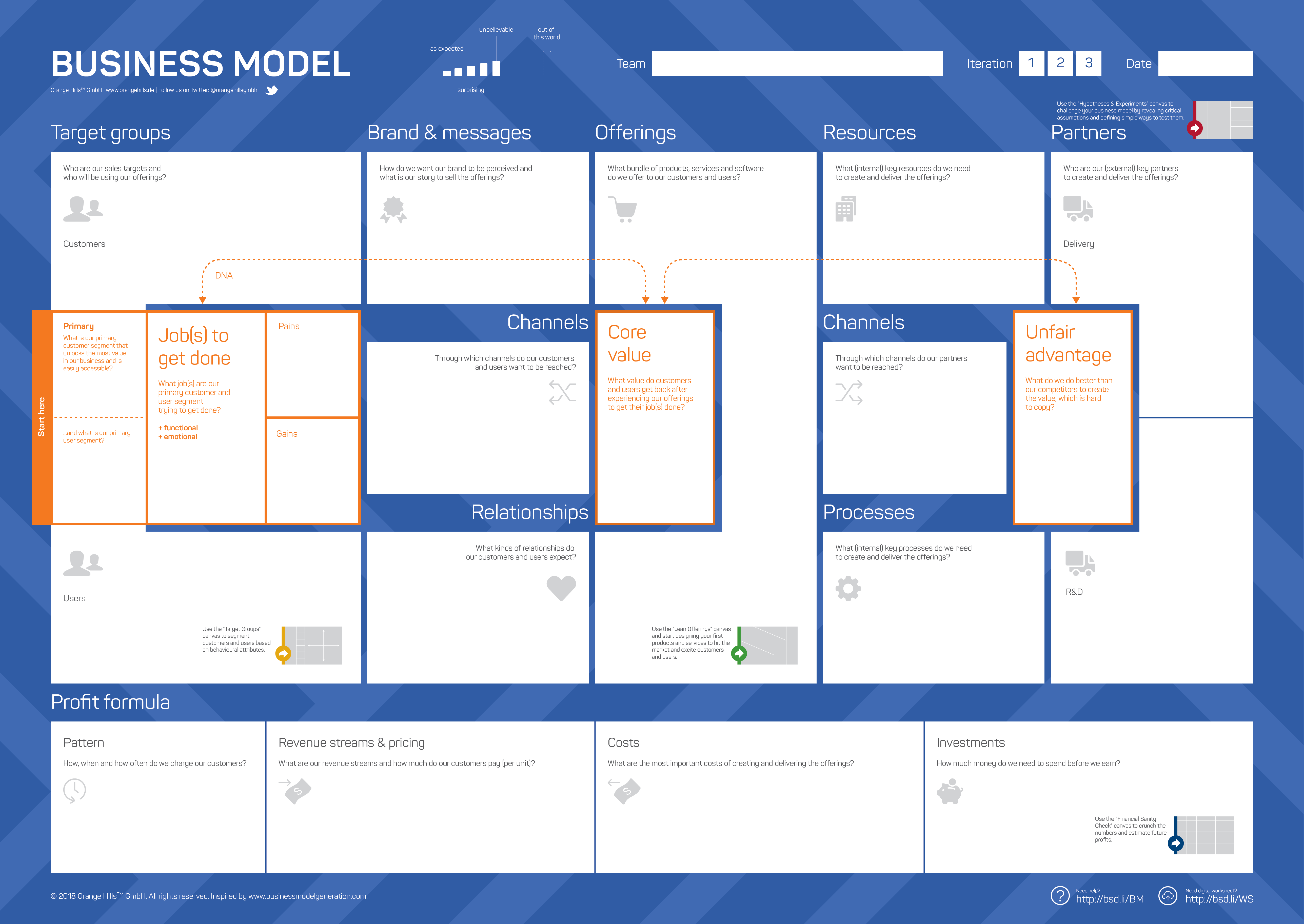
The left part focusses on external components, in order to understand the ways in which you reach and serve your customers and users. The right part comprises internal components to describe how your organisation works to create and deliver high value. The lower part of the canvas is titled “Profit formula” and asks questions about how you generate revenue and what costs are involved to set up and run your organisation.
The “Business DNA” is the very essence of your business model, which helps you tell a compelling story. If you had only 60 seconds to pitch your new business, you should simply focus on the DNA with respect to the questions outlined in the table below.
Think of different scenarios when designing new business models. There are always many ways to create your offerings, to serve your customers and users, and to charge them. Be as clear as possible and avoid nonsensical jargon. Whilst it is so easy just to scratch the surface, try to imagine how your new business model really works.
Keep in mind
How is this different from the Business Model Canvas? If you have worked with the Osterwalder Business Model Canvas (BMC) before, you will notice similarities -- but also important differences. Our business model template puts the customer's job(s) to get done at the centre, not a generic "Value Proposition". It explicitly separates customers from users, adds the concept of an "Unfair Advantage" and introduces a "Business DNA" as a storytelling anchor. The profit formula replaces the BMC's separate "Revenue Streams" and "Cost Structure" blocks with a more integrated view. In short: our template is designed for innovation teams who need to design and challenge a business scenario, not just document one.
2. Layout & Download
3. Key Elements
Element | Question | Comments |
Who are our sales targets and who will be using our offerings? Primary target group: What is our primary customer and user segment that unlocks the most value in our business and is easily accessible? | Good criteria to select a primary target group:
| |
Brand & messages | How do we want our brand to be perceived and what is our story to sell the offerings? | Do this box at the end! It is a kind of a verbal summary in nice words |
Channels (to primary target group) | Through which channels do our customers and users want to be reached? | Keep in mind that every post-it in the section usually costs a lot of money. Identify not more than 1-2 key marketing and sales channels |
Relationships | What kinds of relationships do our customers and users expect? | Here, we talk about attributes (e.g. personal, anonymous, self-service) |
Offerings | What bundle of products and services do we offer to our customers and users? | This section is different to the original Business Model Canvas. It is not about fancy words but a very concrete picture of what the team is going to offer. |
Resources | What (internal) key resources do we need to create and deliver the offerings? | We don’t need a complete list of all required resources. The purpose is to understand what are the strategically most important resources that should be kept internally. It is about the make-or-buy decision. |
Processes | What (internal) key processes do we need to create and deliver the offerings? | Same here. No complete list. The purpose is to understand what are the strategically most important processes and skills that should be kept internally. |
Channels (to partners) | Through which channels do our partners want to be reached? | Not always required. Only for platform business where a company has to handle many partners and, thus, needs efficient channels to reach them (e.g. partner conference). |
Partners | Who are our (external) key partners to create and deliver the offerings? | We distinguish between R&D partners (only needed once to build a new product) and delivery partners (needed every time a customer buys something). |
Profit formula |
| If you are at the very beginning of your innovation journey, postpone this discussion to a later stage. |
DNA |
| Do the DNA at the end and all three boxes together in one exercise. A good DNA statement is usually structured as follows: |
Keep in mind
Related tools: The business model template works together with several other tools. Use the Business Eco-System to map out the network of partners, suppliers and other stakeholders around your business model. Use the Financial Sanity Check to stress-test the numbers behind your profit formula. The Service Blueprint helps you design and detail the processes and touch points in your business model. You will typically create your first business model in the Design Workshop during Step 3: Design.
4. Deep Dive Business DNA
Every business model has a "Business DNA" – its very essence. The DNA consists of three parts: a "job(s) to get done" statement for your primary target group, the "core value" of your offerings and the "unfair advantage" of your organisation, including its value creation network.
Job(s) to Get Done
The term "job(s) to get done" is the fundamental unit of analysis for customer-centred innovation. Use it to build products, services and even business models that fit the world of your customers. Clay Christensen, a professor at Harvard Business School, coined the term. He describes it like this:
With few exceptions, every job people need or want to do has a social, a functional, and an emotional dimension. If marketers understand each of these dimensions, then they can design a product that's precisely targeted to the job. In other words, the job, not the customer, is the fundamental unit of analysis for a marketer, who hopes to develop products that customers will buy.
Clay Christensen explains a "job to get done" well in this short video. A good "job(s) to get done" statement usually follows this structure:
When___, they want to___, so they can___.
Different job(s) need different solutions. Add as many details as possible about your customers’ situation – this helps you design offerings that truly help them get their job(s) done. The picture below shows how different levels of detail in a "job" statement lead to different solutions:
| "Job(s) to get done" | → Offerings |
|---|---|---|
Level 1 | "When I am hungry..." | Restaurant with tasty food |
Level 2 | "When I am in a rush and hungry..." | Fast-food restaurant |
Level 3 | "When I am in a rush, starving and on the go..." | Fast-food restaurant with drive-through |
Level 4 | "When I am in a rush, starving, on the go and need something I can eat while driving my car..." | Fast-food restaurant with drive-through and packing that can be handled with one hand |
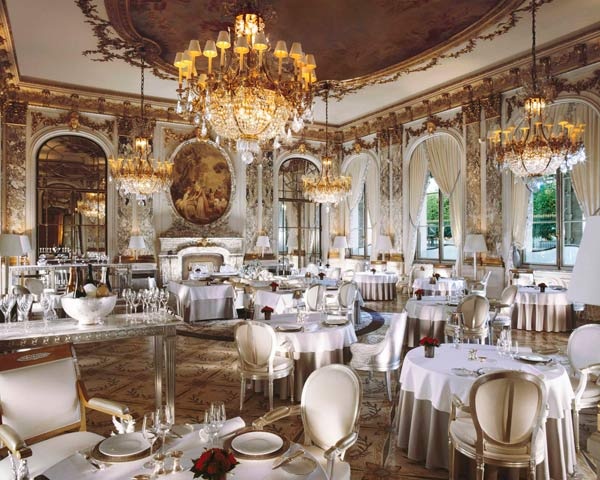
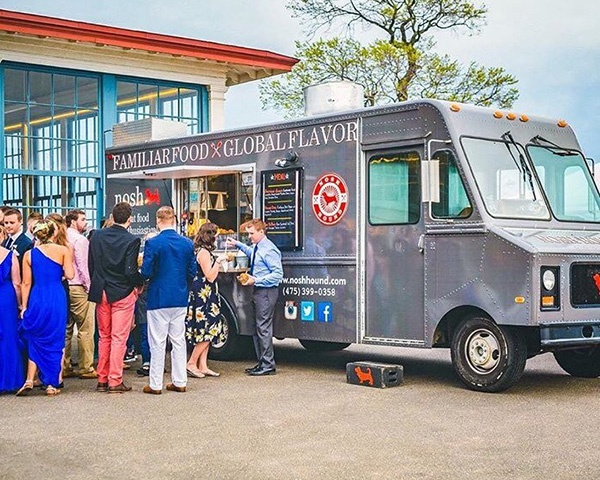
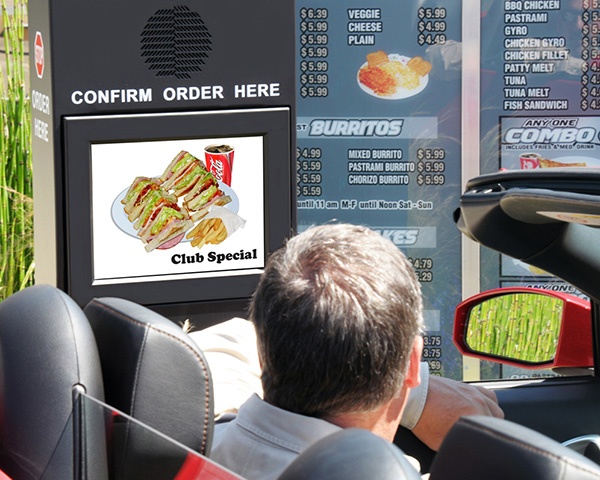
The better you understand your customers’ job(s), the easier it is to design new products, services and even business models. For more radical innovation, skip the obvious "job(s) to get done" statement tied to everyday life. Keep asking WHY the "job(s)" matters to your customers – this gets you to deeper levels of thinking and helps you tackle bigger challenges.
Core Value
The "core value" is the value your offerings create for your target groups. It answers this question: What value do you create for customers and users to get their job(s) done, once they experience the benefits of your offerings? Imagine interviewing customers after they've used your offerings for a while. What do they say? Maybe your offerings saved them time and money, created convenience or joy, or helped them grow personally. Good "core value" statements are precise and measurable:
Example:
Our offerings can reduce the lead time of B2B sales processes (for particular customers) by 30%.
Unfair Advantage
The "unfair advantage" answers this question: What do you do better than your competitors, or what resources do you have that create specific value that's hard to copy? Think of it as life insurance for your business model. If everything goes to plan and your business model becomes a big market success, others will copy you – your "unfair advantage" protects your new business, because you have something in your organisation that can't be copied easily. Don't confuse "unfair advantage" with terms like "unique selling proposition" or "competitive advantage": these refer to a product's capabilities, not to the organisation that creates it.
What could be an "unfair advantage"? There are many possibilities:
Access to customers
Brand perception
Patents for technology
Exclusive partner network
Special work culture
Financial resources
Project teams – especially start-ups – often struggle to name a substantial "unfair advantage". Why? Because they are just starting out. If this is you, imagine what your "unfair advantage" could be in two to three years, then make a plan for developing it as quickly as possible.
Keep in mind
Make sure your "core value" fits the "job(s) to get done" and pain points of your customers, and your organisation's "unfair advantage". The unfair advantage is the true foundation for your core value. If these three elements form a homogeneous unity, your business model is far more likely to succeed.
5. Usage Scenarios
Visualising today’s business model
Creating "high-level" future scenarios as business models
Analysing customer’s or competitors’ business models
Keep in mind
WARNING: The business model template is a great tool to create a high-level overview of business models. At the same time, however, it is the perfect invitation to compile a collection of "bullsh*t bingo" statements with almost no meaning.
6. Q & A
What if the team has a hard time to find clear answers to the questions of the template? It is an indication that you have either skipped Step 2: Discover or not executed it properly. New and surprising insights are key to build meaningful business models.
What if the space on the template is not enough for some elements? The business model template has been designed to create a first draft of today’s or future business model. We have other tools to visualise more detailed content (e.g. job(s) to get done).
What if the business model template has been filled properly but, to be frank, it is boring? Use either the Business Model Inspirator, the Big Data Inspirator or other tools (e.g. extreme goals, trigger questions) to spur on the creativity. A lack of creativity is also a sign of a lack of (surprising) insights from Step 2: Discover.
We sometimes use a “reduced” version of the business model template to create and visualise business ideas - already with a clear customer focus.