
Step 3: Imagine
1. Purpose
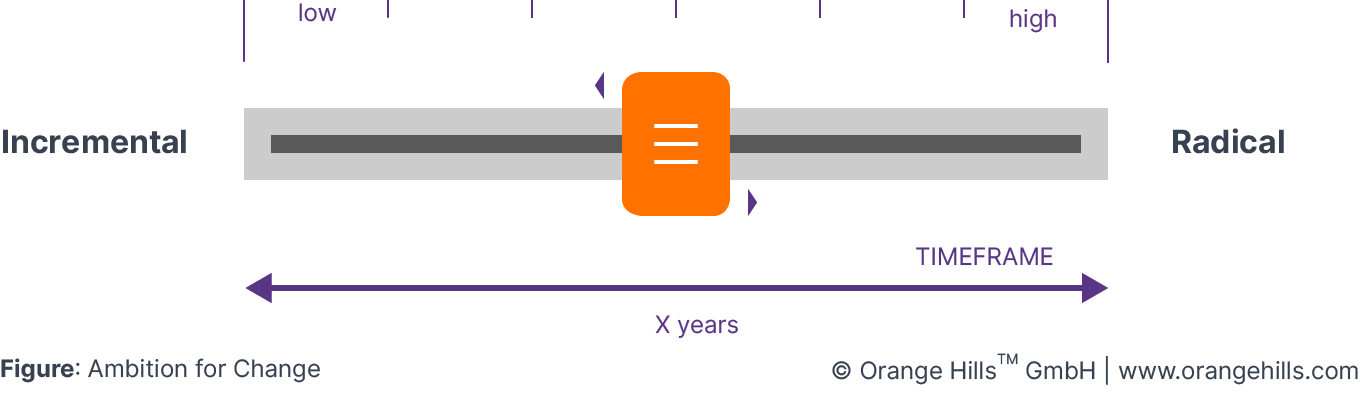
It's time to build the Picture of the Future. This picture is a desired vision of a future world of your customers, users and your own organisation. It becomes the "north star" for every strategic management decision, and for many of the operational decisions your employees make day to day. Make sure that all people involved share the same understanding of the ambition for change (incremental vs. radical) and the timeframe (1-X years).
In a physical workshop or virtual sessions, your management team answers a series of questions that describe a possible future state for your customers and for your own company. Make this even easier: ground the answers in Step 2: Inspire, which runs before the workshop. Alongside the vision, define long-term goals and short-term progress indicators (see Measurement of Success & Progress). The key benefit of these sessions: they align many different pictures and mental models of the future that board members and employees carry around, into one shared, accepted perspective.
A designer and digital tools then help you visualise and document the "Picture of the Future". More on this in the article on the Vision Workshop. Another option for visualisation is LEGO Serious Play.
Keep in mind
Make sure the picture of the future and the long-term goals actually match. Let's say a company wants to double its revenue. That's a signal: the "Picture of the Future" needs to show what resources and processes will look different too — otherwise the vision doesn't reflect the growth you're aiming for.
2. Duration
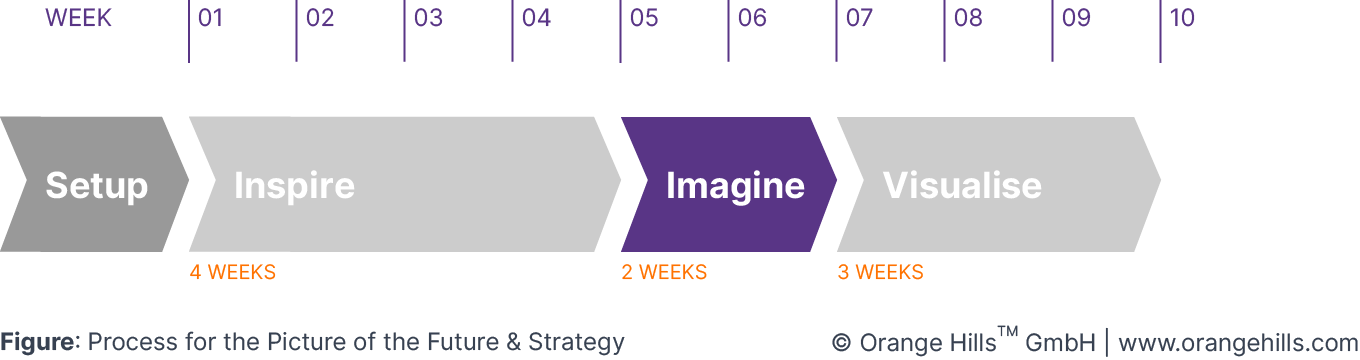
2 weeks
3. Key Activities
The following activities form the core of this phase:
Introduce participants to the world of Pictures of the Future: Participants need to understand the idea behind a picture of the future — and the Leadership style that goes with it — and make it their own. This preparation matters: without it, leaders with a strongly different style, an authoritarian one for example, will understand neither why they're in the room nor why the process exists at all.
Define strategic guiding principles for the future: It's often a good idea to frame the design of a picture of the future with a few key statements as guiding principles. These principles give direction to the discussions that follow. Don't worry if they're quite high-level — you'll break them down in the upcoming steps.
Collect answers to the key questions: We've brought together all the relevant questions for shaping a picture of the future, along with goals and progress indicators, in one clear template. Discussion and friction are more than welcome — encourage them. The questions look simple. Answering them often isn't. Those answers double as the brief you hand the designer to visualise the picture of the future.
Prepare a story: To visualise the picture of the future, a designer — and later your employees — needs more than answers to a list of questions. They need a coherent story. The designer has to understand which elements in the picture of the future become more or less important, bigger or smaller. What are the central elements, and how do they change?
4. Formats
5. Participants
Project Sponsor (usually C-Level Manager)
Designer