
Step 2: Inspire
Inspirational research is a vacation for the mind. You deliberately leave the status quo of today's business behind and set off to look as far into the future as your innovation ambition demands. This article shows you how that works in Business Design.

Gabriele Bacher
Co-Author
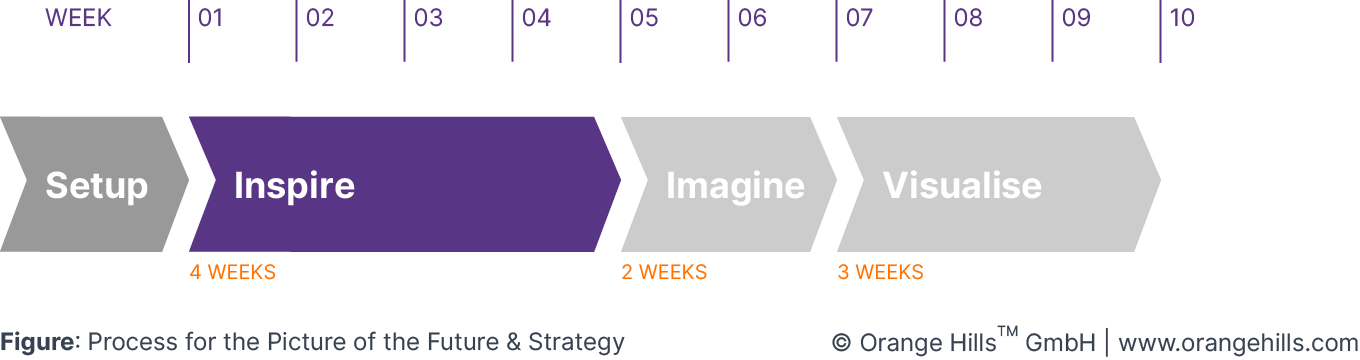
1. Purpose
Building an ambitious future vision often calls for a compact research phase that welcomes the future in. Look at least 3 to 6 years ahead, and analyse trends, the behaviour of specific lead customers and users, and competitors who are already doing today what will become mainstream in the market tomorrow. Don't focus on the pain points of average customers today or what typical competitors offer right now. Zoom out from the status quo instead, and try to understand the big currents and movements that will shape your business tomorrow – the ones you want to influence through your own actions. As William Gibson famously said:
“The future is already here – it’s just not evenly distributed”
To prepare the research, put together a small project team of 2 to 3 experts and focus on the following research categories:
Lead customers & users
Lead competitors
Adjacent industries moving faster
New technological capabilities
Macro-economic trends
Societal trends
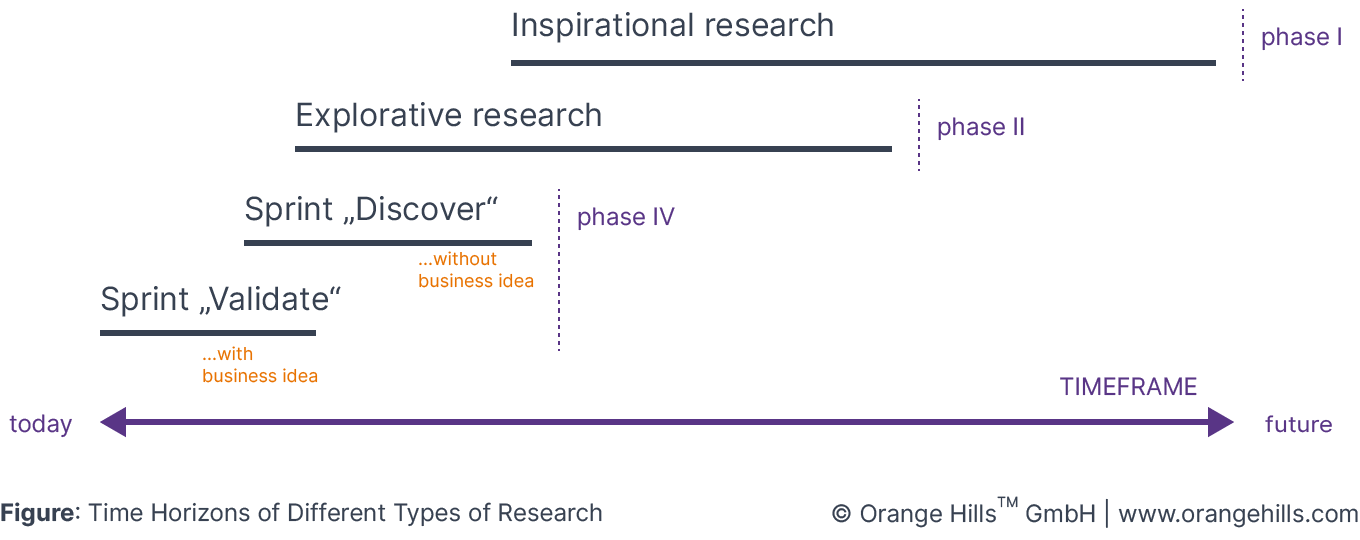
Lead customers and users are innovative individuals or organisations that experience needs way earlier than the general public. They seek out solutions, modify existing products, or invent new ones to meet those needs. You'll find similar patterns when you analyse highly innovative players in the market, such as start-ups or research institutes. They often try to solve foreseeable problems with future technologies, which can be a great source of inspiration. Compared to other types of research along the end-to-end innovation process (Phase I to V), inspirational research covers a wide time span — but it looks furthest into the future.
Working mostly virtually, the project team hunts for exciting developments with genuine curiosity and documents what it finds. Prepare all results so you can present them later in a workshop that develops the future vision.
Be aware: this type of research doesn’t follow the classic quality criteria of scientific research. You’re looking for inspiration about the future, not statistically valid information about the present. That kind of research has its place in later phases.
2. Duration
4 weeks
3. Key Activities
The following activities form the core of this research phase:
Define inspiration space: Once you’ve put together a research team, kick off the inspirational research with a short workshop. First, align the team methodically on this specific type of research and discuss the do’s and don’ts. Then collect research questions for each category (see above) and turn them into concrete tasks.
Execute research: Working virtually, each team member independently gathers valuable information on the research questions. Collect all documents, information, and transcripts in a shared file repository.
Document insights: In a closing workshop, the project team shares and evaluates all the information. Typically, prepare workshop posters for each research category – you’ll present these to participants in the following project phase when you develop the future vision.
Keep in mind that you usually don’t get much time to present the findings from inspirational research. Plan for 1 to 2 hours max in that workshop to get the key messages across.
4. Formats
Kick-off workshop
Closing workshop
Virtual teamwork
5. Participants
Lead customers and users etc.