
Step 3: Imagine
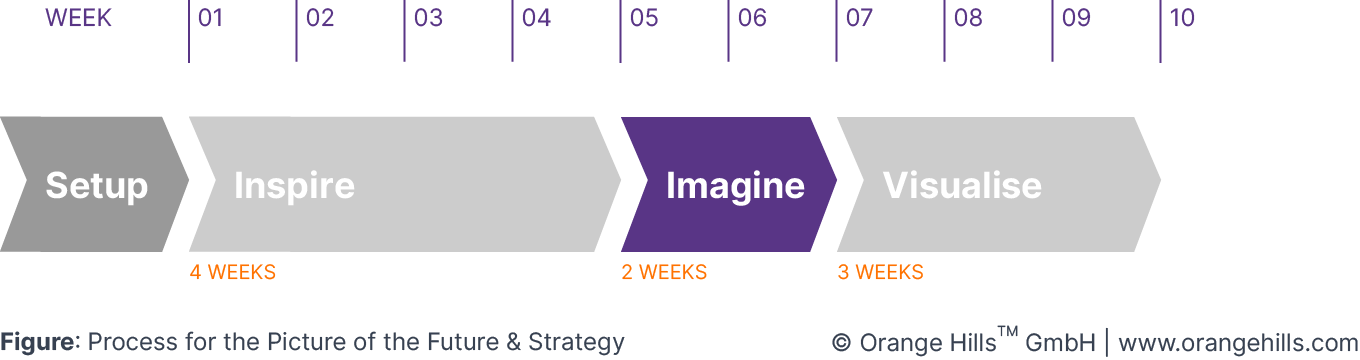
4. Development Process
A "Picture of the Future" can be build in many ways. Basically, we distinguish between two distinct perspectives to tackle this:
Top down: You hire a traditional management consultancy to run a strategy project resulting in 50-200 PowerPoint slides with an impressive analysis of mega trends, market dynamics, promising customer segments, capabilities of your organisation incl. SWOT analysis and, of course, a list of recommendations for you organisation etc. Based on these insights you build your "Picture of the Future".
Bottom up: You run a couple of challenging innovation projects with Business Design for selected "lead users", in the best case, at the edge of your comfort zone to learn under real conditions what "lead users" really anticipate, how pretty new technology really works and what your organisation is capable of doing in the far-stretched innovation space...and what it is not.
Well, the combination of both perspectives entails a certain sort of magic. Define strategic guiding principles "top down" and then bring them to life with real life projects "bottom up", learn and continuously adapt your principles along the way. Before we design the development process for a "Picture of the Future", we need to understand the challenge behind. In practice, we often see the following two types:
Synchronisation: The leaders do have individual "Pictures" of the future of a company, but they are not aligned across all board members and employees. The approach here is to align these individual pictures and create a shared perspective. This case is comparatively easy to solve.
Inspiration: The leaders lack a clear picture and (sometimes) don’t see a benefit in having such a picture. They perceive themselves as an administrator of the status quo and manage their company based on KPIs. In this case, an important step in the development processes is to provide decent inspiration about the future of the industry, direct and indirect competitors, new technologies and the voice of customers before we start building a "Picture of the Future".
Typical phases of such a development process are:
Setting the space: We usually have 1:1 interviews with everyone participating in the development process. We explain the idea behind a "Picture of the Future" as a modern leadership tool and clarify expectations. We also try to get a sense of existing individual perceptions on the future of the company, since this will have a tremendous impact on the design of the next phases in the development process.
Inspiring research / foresight: Depending on the challenging the process is trying to tackle (synchronisation versus inspiration, see above), it is required to provide inspirational research results that help leaders create their own perspective on what the future of the given context might look like. This may include stories around competitors’ initiatives, what customers think and believe about their future, new technologies or regulations that might affect the business of the future etc.
Defining future scenarios and visualisation (iterative process): In 2-3x workshop sessions, participants of the development process will be confronted with a range of questions around the future "life" of customers, of the organisation etc. (see above). The answers will be captured and after each session, a specially-trained PotF Designer joins the conversation, listens to the story and drafts a first or the next version of the "Picture of the Future". The current version of the picture is always subject to change.
Final documentation & storytelling: The "Picture of the Future" will often be documented in a playbook (PowerPoint, Miro, Wiki) including audio and video explanations of someone walking through the picture and explaining key elements as a compelling story.
Roadmap & next steps: And finally, every development process ends with the definition of so called "playgrounds" (see below) for next innovation initiatives and projects mapped on a timeline with resource and budget planning.
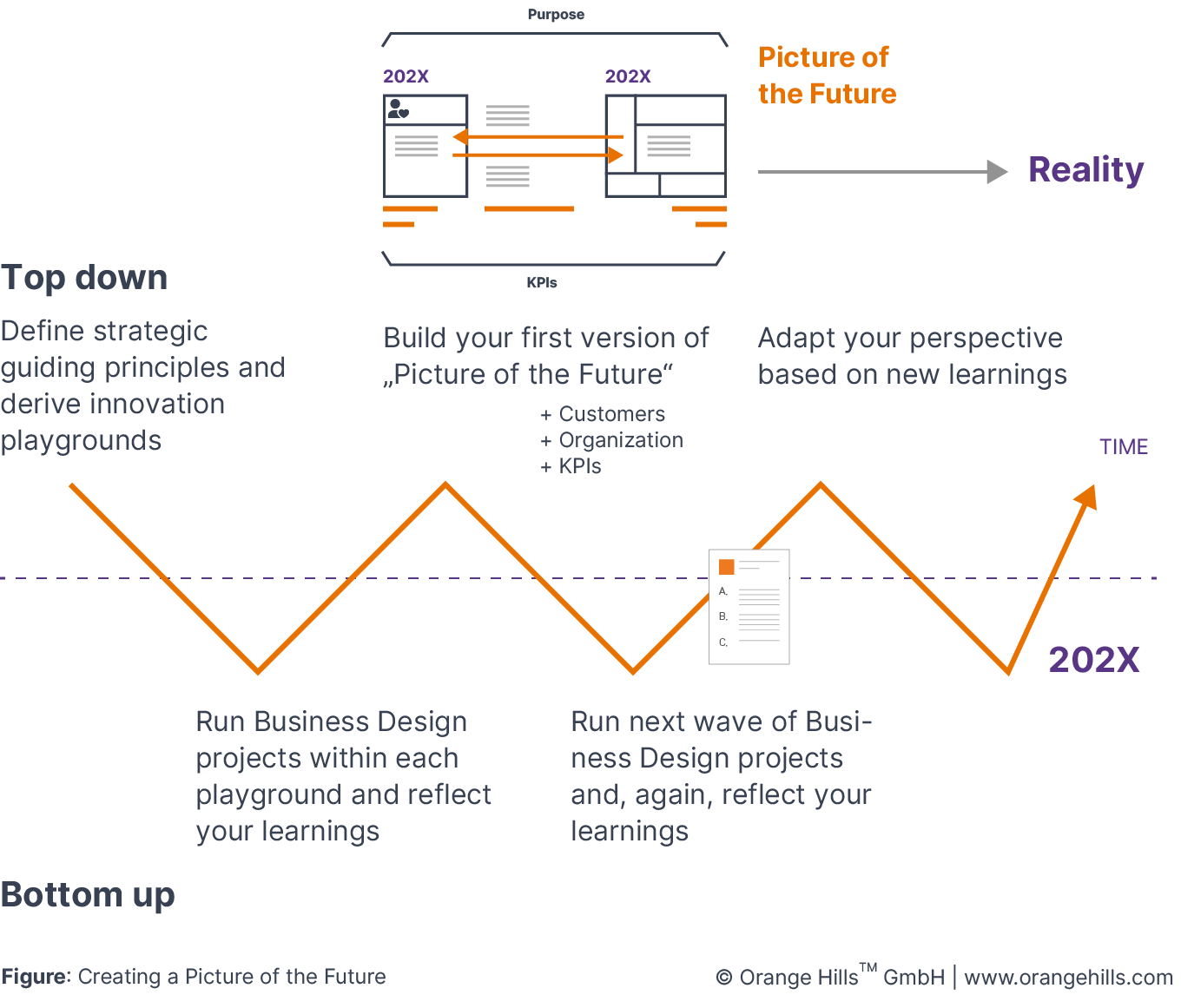
The illustration above shows how Business Design projects can be embedded into a strategy-building process to find reliable and authentic answers to the questions before. Based on the learnings from running Business Design projects, we unveil the "naked truth" about an organisation, specifically around the "What?" and "How?" question and help leaders of an organisation to even find answers to the "Why?" question. Then, building a tangible "Picture of the Future" with (usually financial and sustainable) KPIs is the logical next step.
5. Tools
Golden Circles
Answers to the questions before can be grouped and visualised with the so called "golden circles"- a term initially coined by Simon Sinek.
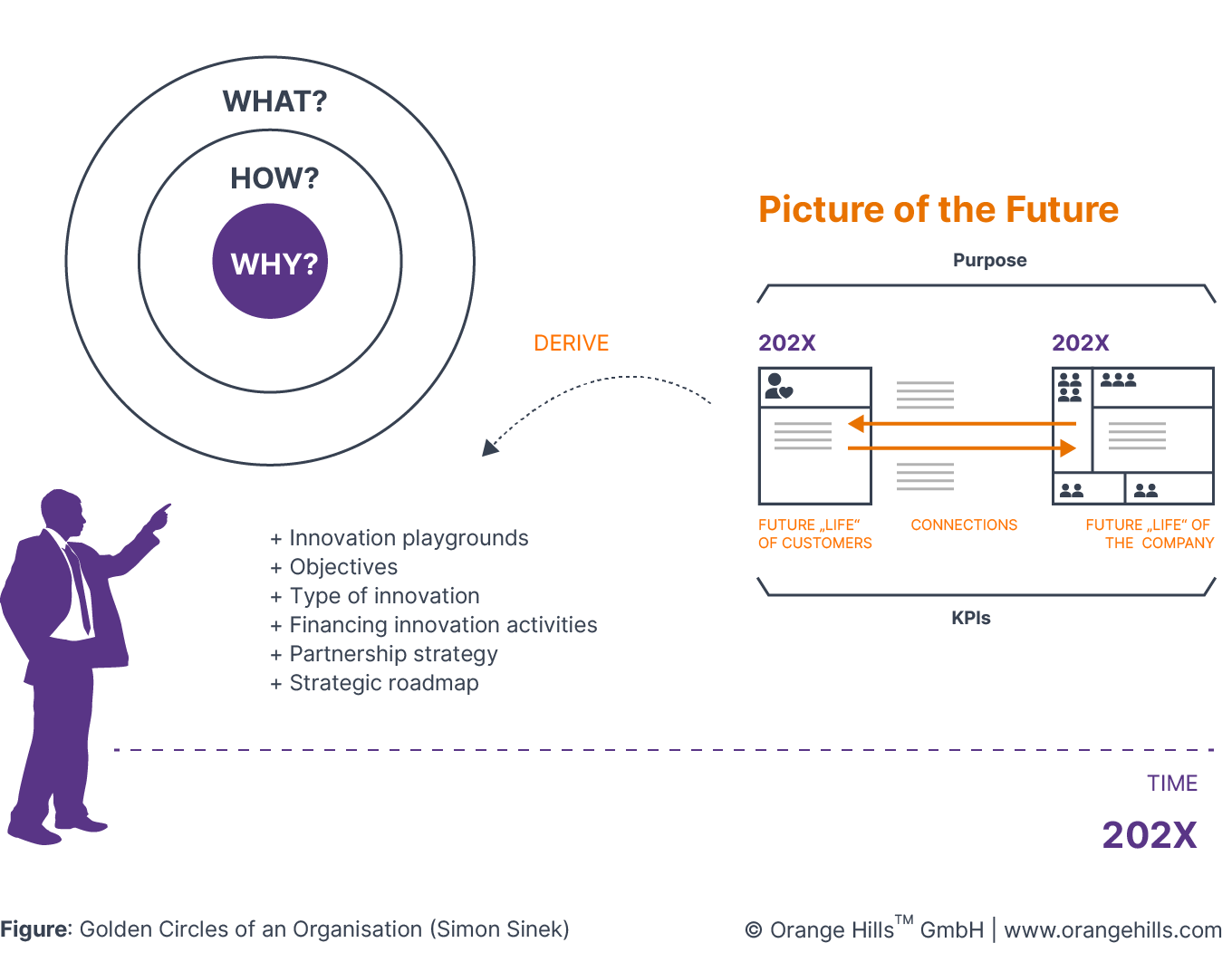
The "Why?" question refers to the purpose of an organisation, its beliefs and reason why the organisation exists and should exist in the future. And what is their value add for people and the planet. It is usually an emotional statement that makes employees or members of the organisation proud and 100% committed (see "purpose of your organisation").
The "How?" question links to the "secret sauce" how an organisation creates value for customers, partners and / or the society. This can be guiding principles, processes or special skills (see "life of your organisation").
The "What?" question is usually the easiest to figure out: The answer may include products and services an organisation sells or provides to the outside world (see "connections").
3D Toolbox
The 3D Toolbox is an effective communication tool to align different perceptions and get a common understanding of ideas and verbally expressed thoughts. To create these visualizations with the Toolbox in digital settings (when LEGO Serious Play is no option), we use the 3D Toolbox to translate words or workshop results into tangible images. The reasons are simple:
Using the 3D Toolbox allows us to visualize even abstract, complex or intangible aspects of an organization (e.g., culture, leadership style, quality of teamwork).
Building models with the 3D Toolbox enables a group of managers to create a shared understanding of their visions. Since the result of the creation process is a digital artifact, it can be adjusted and refined at any time.
Another critical success factor is the support of a competent Business Visualizer with a background in business design, business strategy development, and graphic design to use the 3D Toolbox. In creating the visualization, the visualizer not only acts as a translator from word/workshop result to image but also plays a crucial role in condensing the content to the essential elements of the "Picture of the Future" and significantly reduces the amount of iteration to finalize the picture (especially compared to a pure graphic artist).
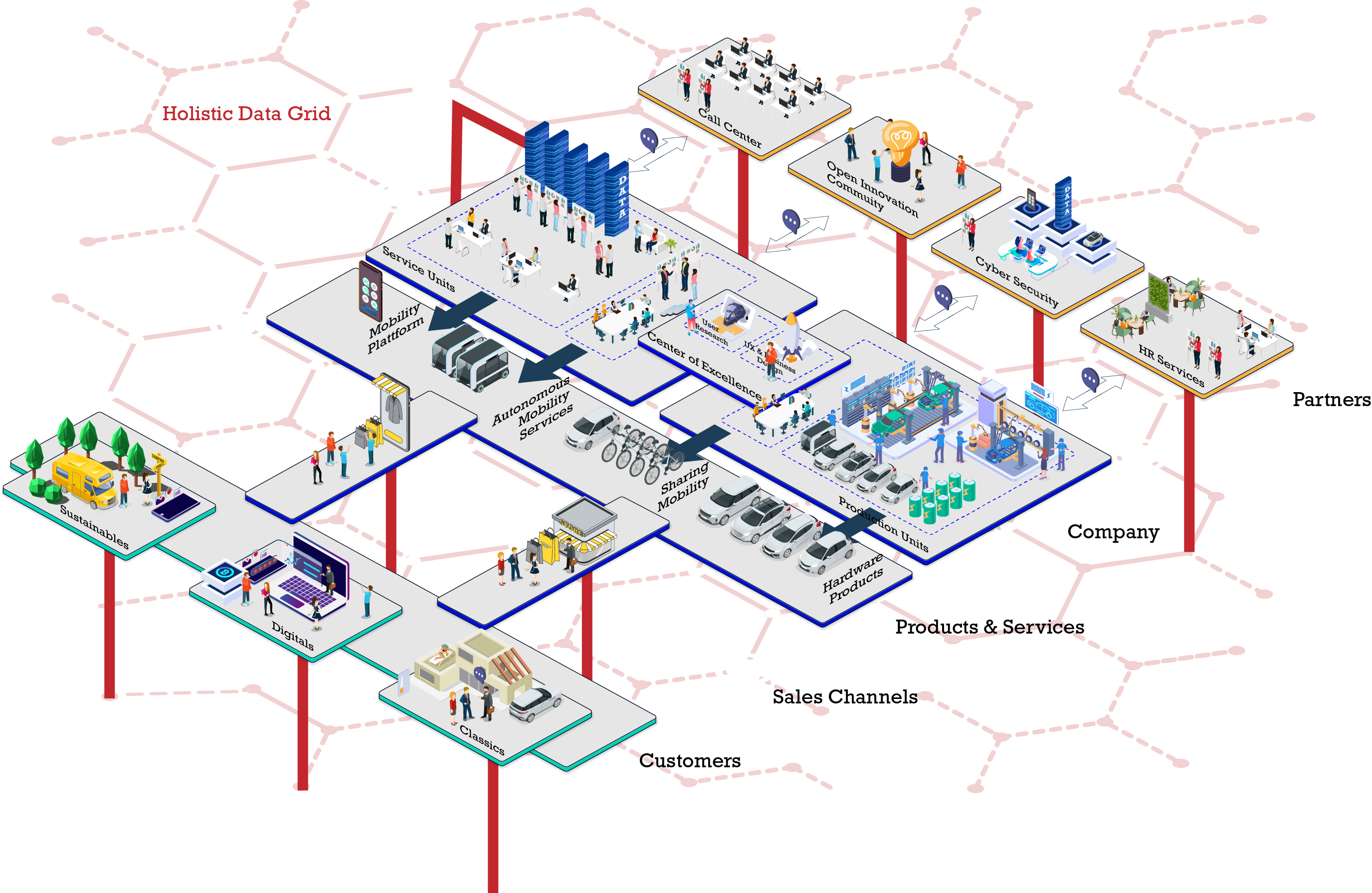
Here is an example what a "Picture of the Future" in 3D may look like:
LEGO Serious Play
Modeling with LEGO bricks is a very powerful approach to develop aligned answers for tough and abstract questions in a highly diverse group of people. We use LEGO a lot to visualise a "Picture of the Future" of a company. The reasons are simple:
Using LEGO bricks allows us to visualise even abstract or intangible aspects of an organisation (e.g. culture, leadership style, quality of teamwork, social and environmental impact).
LEGO models can be easily modified and almost refined in real-time in a workshop scenario. This is important when a group of managers create a shared understanding about their visions.
Building LEGO models doesn’t require any special training. Fiddling with bricks is what many of us know from their childhood.
Building LEGO models doesn’t need special infrastructure or premises. It just works in any kind of office space. You just need a BIG table.
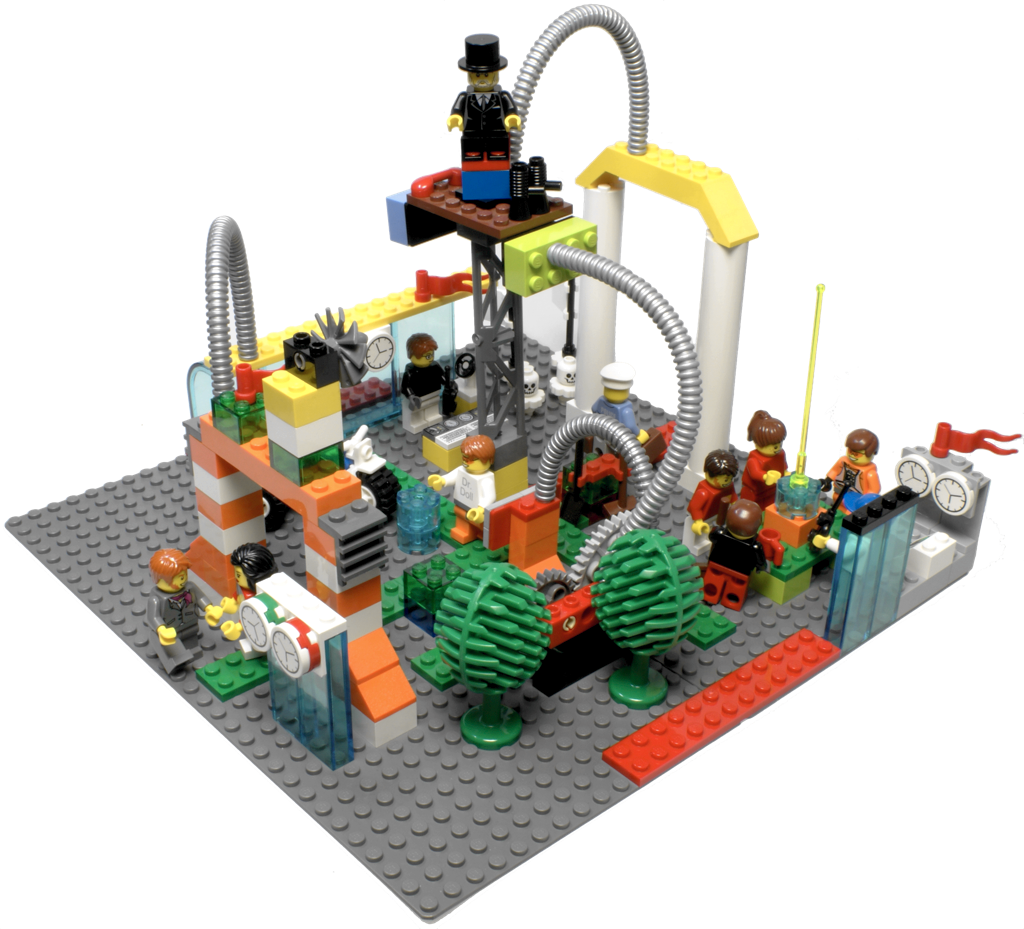
Please check out this article for further information.
6. Next Step: Definition of Playgrounds
Now it is time to define your strategy as your way to realise your "Picture of the Future". One of the next steps in this context is to use this picture as a reference point to derive so called "playgrounds" and to create and prioritise ideas as well as upcoming innovation projects in a portfolio matrix (x: distance to success, y: strategic fit). A "Picture of the Future" can spark ideas with setting out the strategic ambition and tapping in the creativity of all people in the company. These ideas and projects are then supposed to be executed in a Business Design manner to build the future incrementally.
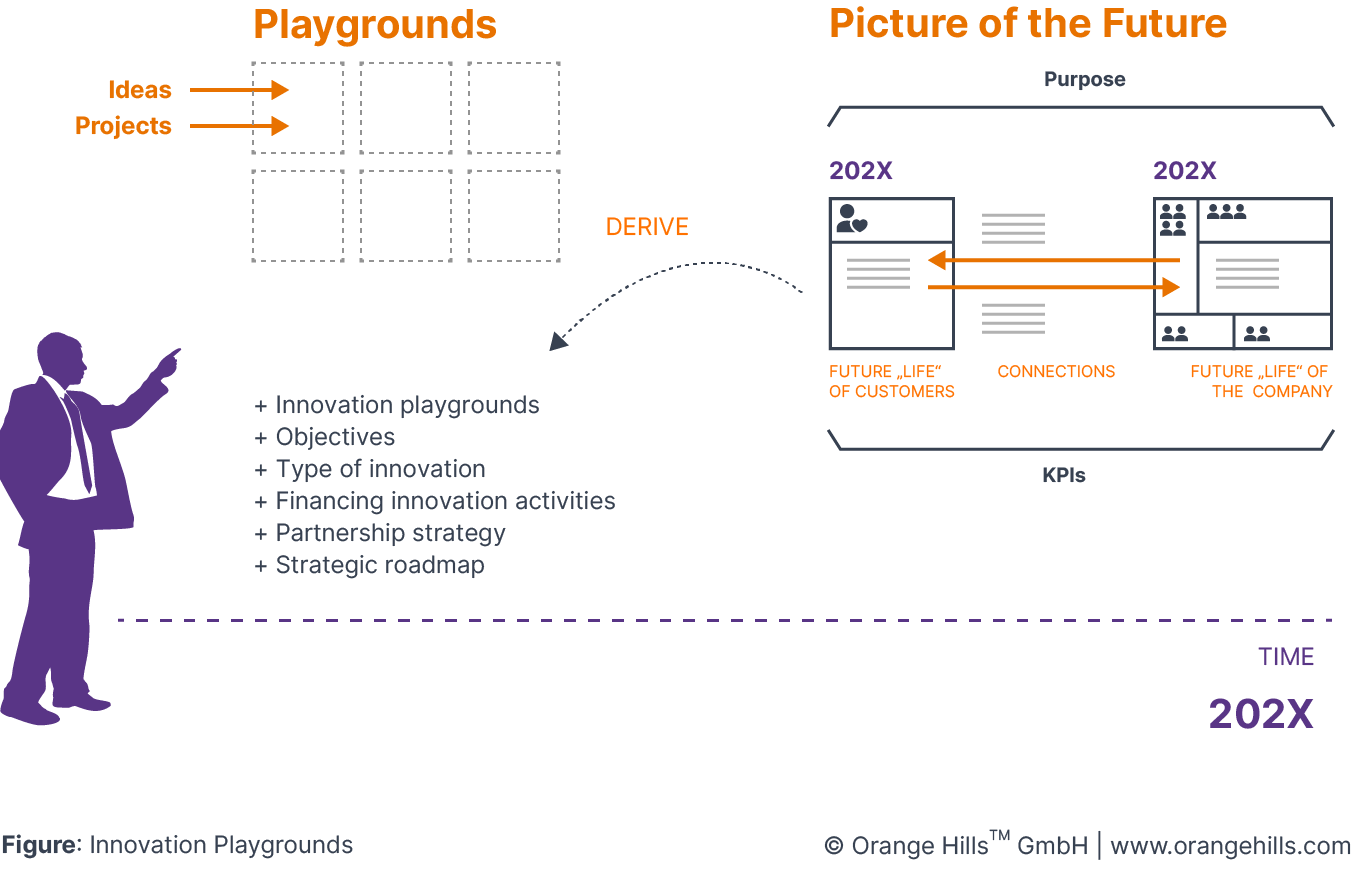
Playgrounds are framed spaces in which you aim to innovate. They are always derived from the "Picture of the Future" and can be defined around new technologies, trends, new customers or even new skills of your organisation. Examples are:
"New products for young families following circular economy principles"
"New platform-based solutions around democratising our data for the greater public good"
"Technologies that might help us design more sustainable products and save energy, waste and water in our production process"
And finally, the loop is closed to ideation, our Business Design sprints and the preparation needed to kick-off real-life projects.
1 "Sustainability" is one of these modern buzzwords that requires a more precise definition: For us, "sustainability" means the operational approach of a business to meet its goals without impeding future generations to meet their needs and desires. "ESG" (= Environmental, Social, and Governance), in contrast, represents a framework to assess sustainability initiatives using metrics and benchmarks.